When the Next Chapter Has No Fixture List
Athlete transition after competition can unsettle routine and purpose. Build a manageable week, reconnect with people and explore a next step without rushing.
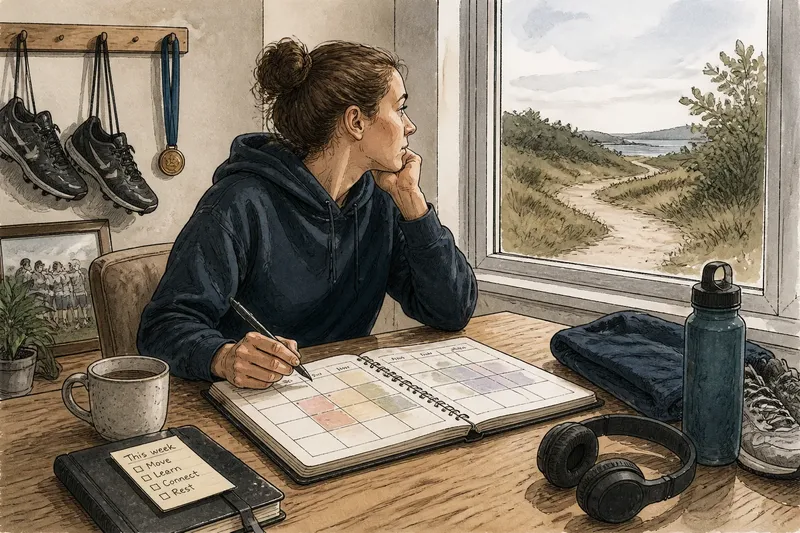
The common mistake in an athlete transition after competition is treating the final fixture as a finish line for everything else. Training stops or changes, but the calendar, relationships and sense of usefulness do not rearrange themselves on cue. That gap can leave you unsure how to shape a free morning or which parts of your old routine still serve you.
There is no single correct timetable for moving away from competition. Start by noticing what has become difficult, consider what may be driving it, and try one adjustment at a time. The aim is not to recreate an athlete’s life outside sport, but to build days with shape and reasons to get up.
When an open calendar feels like a loss
Training may have set the rhythm of meals, sleep, travel, recovery and social plans. Without it, the day can seem empty even when practical tasks remain. Often, the missing piece is not a lack of interests but the familiar cues that told you what came next.
Separate useful structure from competition-specific demands. Keep a regular wake-up time or a planned morning walk if it helps you feel steady, but do not assume every session must be replaced with another demanding commitment. Put appointments, meals, exercise and unclaimed time in a paper diary or digital calendar, leaving space between them.
Say you have always trained before lunch and now find yourself drifting through the morning. Imagine trying breakfast at a set time, a short walk and one practical task before midday; the observable result to look for is whether the afternoon feels easier to manage. Keep, adjust or drop the sequence according to what you notice, rather than copying a routine designed for another phase of life.
When rest feels undeserved
Athletes can be used to judging a day by effort, progress or selection. If that measure follows you into retirement or a break from competition, rest may feel like failure and ordinary tasks may seem too small to count. That pressure can lead to filling every hour simply to avoid feeling unproductive.
Define a good day in terms that do not depend on performance: keeping a commitment, speaking with someone you care about, learning something or taking proper rest. Choose a small number of priorities for the week rather than setting a demanding daily scorecard. If guilt persists or starts to affect sleep, mood or daily functioning, speak with a qualified health professional.
When the next goal is too vague or too big
“Work out what comes next” is not an actionable task. It can make every choice feel as if it must determine an entire future, especially when sport has occupied years of attention. The difficulty may lie in the scale of the question, not a lack of ambition.
Replace the life-sized question with a short experiment. If coaching interests you, ask a local club what assisting at a session involves; if study appeals, speak to a course adviser about entry requirements and time commitments. Set a date to review what you learned, then decide whether to continue, adjust or stop. A trial can give you useful information without requiring a permanent identity or commitment.
Before each conversation, note what you want to find out. Questions such as “What does a typical week involve?” and “Which skills would I need to learn?” are more useful than asking someone to decide what your whole future should be.
When sport contacts make every option feel temporary
Leaving competition can change how often you see teammates, coaches and support staff. A social circle built around training may not know how to stay connected when the shared schedule disappears, while people outside sport may not understand why the change matters. Neither situation means you have to discard old relationships or explain your whole story to everyone.
Choose a few people you want to keep in your life and suggest a specific way to stay in touch: a regular coffee, a call after work or attending a match together. Also make room for contact in settings that do not depend on your former team. A class, neighbourhood group or volunteering role can offer repeated, low-pressure chances to meet people through a shared activity.
If you are unsure how to describe the transition, say what has changed and what kind of contact would help. That is clearer than waiting for others to guess whether you want company, space or practical support.
When your old routine leaves no room for the new one
Some athletes try to preserve every part of their training schedule while also taking on work, study, caring duties or a new sport. The resulting strain can look like poor discipline, but the old timetable may simply have been designed around competition and recovery. A routine needs to fit current responsibilities, not prove loyalty to the past.
Write down commitments that cannot move, then identify the habits you want to retain because they genuinely help. Make the rest optional or seasonal. If a training habit is tied to injury management, medication or another health concern, ask an appropriate clinician how to adapt it rather than making assumptions.
Which questions help make an athlete transition after competition manageable?
How do I build a routine without training?
Choose a few reliable anchors, such as a wake-up time, meals and one planned activity, then leave room for rest and unplanned tasks. Review the routine after trying it through ordinary weeks, not only on days when motivation is high.
What if I do not know what I want next?
Start with what you want to learn rather than the job or identity you think you must choose. Arrange a conversation, visit or short trial that can answer one practical question, then decide on a further step based on what you notice.
How can I keep a sense of purpose without competing?
Look for ways to contribute that suit your current capacity, such as helping a club, supporting a younger athlete or taking responsibility in a community activity. Treat these as possibilities to explore, not replacements you must accept because they are connected to sport.
When should I ask for professional support?
Consider a qualified counsellor, doctor or career adviser if distress persists, daily life is becoming difficult, or decisions about work and finances feel unmanageable. A professional can help you sort through the specific issue without requiring you to present a neat account of the whole transition.
Let the next chapter take a workable shape
An athlete transition after competition is easier to approach as a series of real questions rather than a test of character. Notice what has become difficult, identify the routine or expectation beneath it, and try one change you can review. Keep what serves you, seek help where the stakes call for it, and let purpose develop through choices you can make this week.
A fixture list once supplied dates and direction; it need not be replaced by another rigid plan. A calendar with a few meaningful commitments and room to change course can be a sound beginning.