The Quiet Work of Being a Teammate
Learn how trust on a sports team grows through reliable habits, clear communication and small acts that help teammates play with confidence.
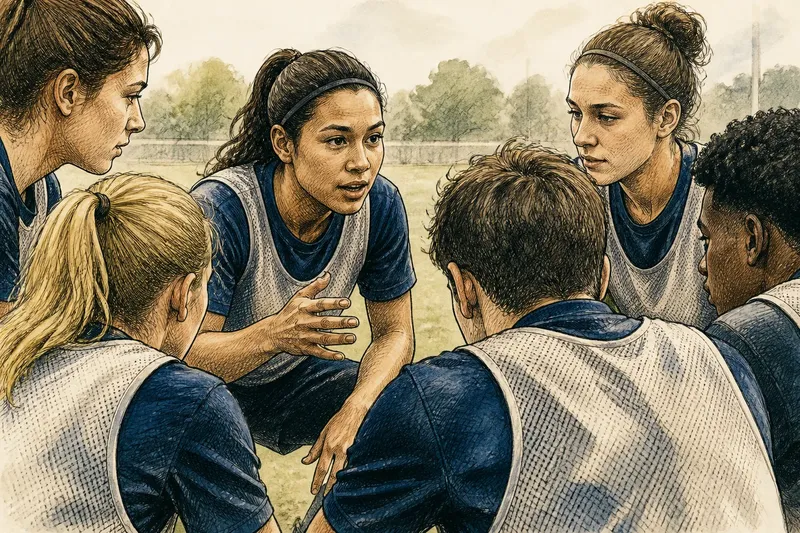
The common mistake in thinking about team chemistry is to wait for a speech, a comeback or a defining match to make people trust one another. On a sports team, that delay can cost a teammate a clear answer, a useful warning or the confidence to ask for help; trust usually starts with the small things people can count on.
Good teammates make their intentions legible. They arrive ready, speak plainly, own their mistakes and notice what the group needs without turning every act into a performance. Those habits do not make every partnership close or every match go well. They make it easier to work together when pressure, fatigue and disagreement arrive.
How does trust on a sports team actually grow?
Trust on a sports team grows when someone’s words and actions keep matching. A player who says they will cover a space, share information or check in after training earns confidence by doing those things consistently, especially when there is little recognition for them.
Reliability is not the same as never making an error. It is being predictable in the useful sense: teammates know you will communicate if a plan changes, take responsibility when you miss something and keep contributing after a difficult moment. A mistake can be repaired; unexplained silence can leave others guessing.
Small actions also show that a teammate is paying attention. Returning a ball to the right place, passing on a change in the session plan, or asking whether someone has understood an instruction can reduce friction. The action need not be grand to matter. It needs to be relevant and followed through.
What does reliability look like in ordinary training?
Reliability begins before the session gets under way. Check the team message, bring the kit you need, and tell the coach or captain early if travel, illness or another commitment may affect your attendance. If you are delayed, give a useful update rather than leaving others to infer what has happened.
During drills, be ready for your turn and pay attention while someone else is working. If you are responsible for feeding balls, keeping time or setting up cones, do the task properly instead of treating it as an interruption to your own practice. The quality of a session depends partly on the attention teammates give one another.
Say you are a reserve player asked to help a starter work on a receiving drill. You could arrive late and give each pass little care, or you could ask what kind of service is useful, keep the feed consistent and mention when the player is drifting too far from the target area. The expected observable result is a smoother drill and clearer feedback, not instant closeness or a promise of selection.
Follow-through matters after training, too. If you agree to send a clip, bring a piece of kit or pass on a message, either do it or explain promptly that you cannot. A quick correction protects the group from planning around a commitment that has quietly disappeared.
How can teammates communicate without making things awkward?
Use short, specific language that helps the next action. A call such as “man on”, “switch left” or “I’ve got the runner” gives a teammate information they can use. In a debrief, “I lost sight of the runner when I turned” is easier to discuss than “you always leave me exposed”.
Choose the right moment as well as the right words. During a fast drill or a close contest, keep communication brief and focused on play. Save a longer conversation for a quieter setting where both people can listen, rather than raising a personal concern in front of the whole squad.
Listening is part of the exchange. Let a teammate finish, check what they meant and ask a direct follow-up if something is unclear. You do not have to agree with every view to show you have heard it. A response such as “I see the space you mean; I read the play differently” keeps the disagreement tied to the situation.
Non-verbal signals need attention, too. A nod, a hand gesture or eye contact can help when the noise is high, but assumptions about what a look means can cause needless resentment. If a teammate appears withdrawn, ask privately how they are rather than announcing a diagnosis for the group.
How should a teammate respond after an error or a hard loss?
Respond first to what the moment requires. If someone has made a mistake and play is continuing, offer the next useful instruction or cover the space. A grimace, a sarcastic remark or a long lecture can make the next decision harder without repairing the first one.
After the immediate pressure has passed, be honest and proportionate. Name the specific action, explain its effect and ask what would help next time. “We both went for the same ball; should one of us call it earlier?” opens a practical conversation more readily than turning one incident into a judgement about someone’s character.
When you are the person who made the error, acknowledge it without demanding that teammates comfort you. A concise apology and a plan to communicate differently can be enough. If the explanation matters, give it after the session or match, when the conversation can be heard rather than squeezed into a tense moment.
A difficult result can expose different reactions. Some players want to talk straight away; others need quiet first. Ask what kind of conversation would help, and respect a reasonable pause while still returning to any issue that affects the team. Moving on should not mean pretending a repeated problem does not exist.
How can a new or quieter player earn a place in the group?
A newcomer does not need to imitate the loudest person to contribute. Learn the names people use for positions, calls and routines, then ask a coach or teammate when a detail is unclear. Showing interest in how the group works is more useful than pretending to understand everything.
Find a few practical ways to be dependable. Be ready for your role, communicate when you need the ball or support, and offer help with shared tasks. These behaviours let others understand what they can expect from you while you learn the group’s style.
For quieter players, one clear contribution at a time is enough to begin. A timely call, a direct question or a brief check-in can open communication without forcing a personality change. Teammates can help by leaving room for different voices and not treating volume as proof of commitment.
Belonging does not mean accepting every team habit. If a joke, ritual or demand crosses a personal boundary, say so plainly to the person involved or seek help from a coach or another trusted adult. A healthy team should be able to distinguish shared standards from pressure to tolerate disrespect.
What can you say to a teammate who seems disengaged?
Start with an observation rather than an accusation. “You’ve been quiet in the drills today; do you want to talk?” gives the person space to answer, correct your impression or decline. Avoid guessing that they are lazy, upset or uninterested.
Listen to the reply before offering solutions. They may be dealing with something outside sport, unsure about their role or simply having a low-energy day. Ask whether they want practical help, a conversation with the coach or some room, and do not promise secrecy if someone’s safety may be at risk.
If the change continues or affects the team’s work, raise the specific concern through the appropriate coach or team contact. Keep the account factual and private. You can care about a teammate without becoming responsible for solving every difficulty they face.
How do teammates repair trust after a disagreement?
Repair starts by making the disagreement specific. Identify what was said or done, what effect it had and what you would like to change. Avoid recruiting the squad to take sides; public alliances can make a manageable conflict harder to address.
Take responsibility for your part, even if you believe the other person was also at fault. An apology works best when it names the behaviour and does not tack on a defence that cancels it. Then ask what a more workable approach would look like in the next training session.
Some conflicts need a neutral person. If repeated conversations stall, or there is bullying, intimidation or an imbalance of power, involve a coach, club welfare lead or another appropriate support person. Do not treat reconciliation as a duty to accept harmful behaviour.
Trust returns through subsequent conduct, not a single conversation. Keep the agreed change visible: make the call, share the responsibility or speak directly instead of reopening the argument through side comments. The other person may need time before the relationship feels easy again.
Which small habits make a team easier to rely on?
Choose habits that address real needs in your sport and setting rather than copying a ritual from another team. Useful starting points include:
- Check the plan: Read the team message before travel and ask about anything unclear.
- Be ready for your role: Know what you are responsible for in the drill or match, and say if that responsibility changes.
- Use clear calls: Give information early enough to help, and keep it focused on the next action.
- Close the loop: Confirm when you have passed on a message, returned shared equipment or completed an agreed task.
- Correct privately: Raise sensitive feedback away from the group when the immediate situation allows.
- Ask before assuming: Check what a teammate meant instead of building a story around silence or body language.
- Share credit and responsibility: Notice useful contributions, and own your part when a plan does not work.
Keep the habits manageable. A team does not need to add a ritual for every problem; it needs clear expectations people can maintain. If a routine creates extra pressure or excludes someone, discuss whether it is serving the team at all.
The quiet work of being a teammate is less about constant closeness than dependable conduct. Trust on a sports team grows when people communicate what others need to know, keep their commitments and address friction without turning it into a spectacle. The useful question to carry into your next session is simple: what can my teammates reasonably expect me to do, and have I made that clear?